Restaurant choices, explained
Restaurant menus: read, compare, plan
Choose a meal with clear information about portions, ingredients, and your plans. Use our free calculator to add the calories you enter from a restaurant menu.
Your menu, your portions
Restaurant meal calorie calculator
Enter the published calories for each listed serving. Then enter how many of those servings you expect to eat. Include sauces in the main or side value only when the restaurant provides their calories separately.
Use zero for an item you will not order. A blank calorie field means the value is unknown, so the calculator will not show a total. The starting values show an empty meal.
Enable JavaScript to calculate your meal.
Method: add calories per serving × servings eaten for each item. The tool accepts up to 10,000 calories and 10 servings per item. These are input limits, not dietary guidance. Results round to one decimal place. Your entries stay in this page; the calculator does not send or save them.
Use the exact serving described by the restaurant. A meal bundle may already include the side and drink; avoid counting them again. This tool performs arithmetic only. It cannot identify ingredients or calculate calories from a food name. Educational tool, not medical advice.
Know what US menu labels cover
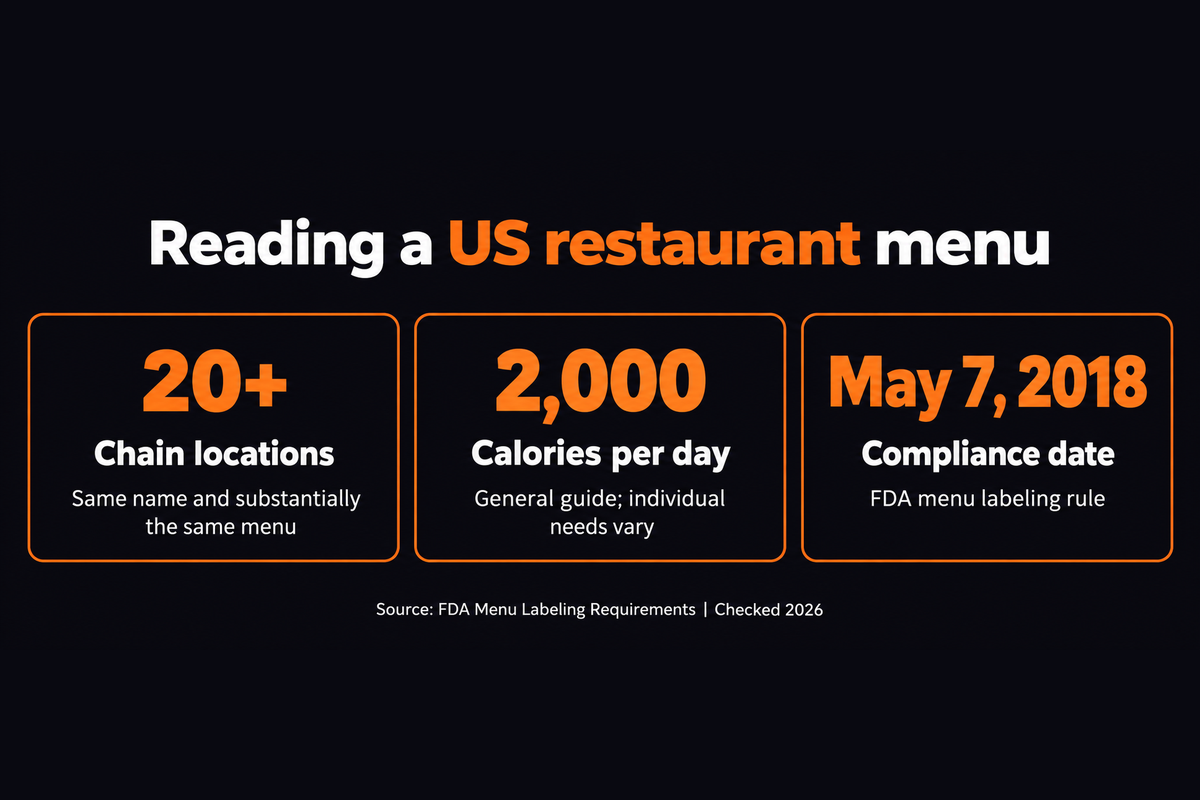
The FDA's Menu Labeling Requirements (checked 2026) gives May 7, 2018 as the compliance date. The rule covers restaurants and similar food businesses in chains with 20 or more locations. They must operate under the same name and sell substantially the same menu items.
Covered businesses must list calories for standard menu items. They must also provide written nutrition information on request, including sodium, fiber, and protein. Ask for that information when calories alone do not answer your question.
The familiar 2,000-calorie daily figure is a general reference. The FDA says individual calorie needs vary. This calculator does not turn that reference into a personal target. It also does not rate a meal as good or bad.
Choose a restaurant that fits the occasion
Start with the practical details: location, opening hours, price, and the people joining you. Check the restaurant's own menu before you travel. Confirm availability directly when a particular dish matters. Keep a backup choice if the menu changes.
Compare the complete order, including drinks and extras. For a shared dish, agree on the portion you plan to eat. Enter that portion as a fraction of the listed serving. Avoid assuming that everyone will divide every dish equally.
Tell the restaurant about any ingredient restrictions before ordering. Ask staff to check the preparation if you need more information. A calorie total cannot answer an ingredient question. Use the restaurant's current information instead of inferring details from a dish name.
Make a plan you can use again
Keep a short note of meals you enjoy, the portion description, and where you found the nutrition information. Record substitutions separately. When you return, check the menu again before reusing an old value.
For a week that includes dining out, decide which meals need a reservation and which need flexibility. Include the cost of extras in your spending plan. Use this page to organize your choice; it does not find restaurants, make bookings, or provide a chat service.
Sources reviewed October 28, 2026: US Food and Drug Administration, Calories on the Menu and Menu Labeling Requirements. The guidance above applies to US menu labels.